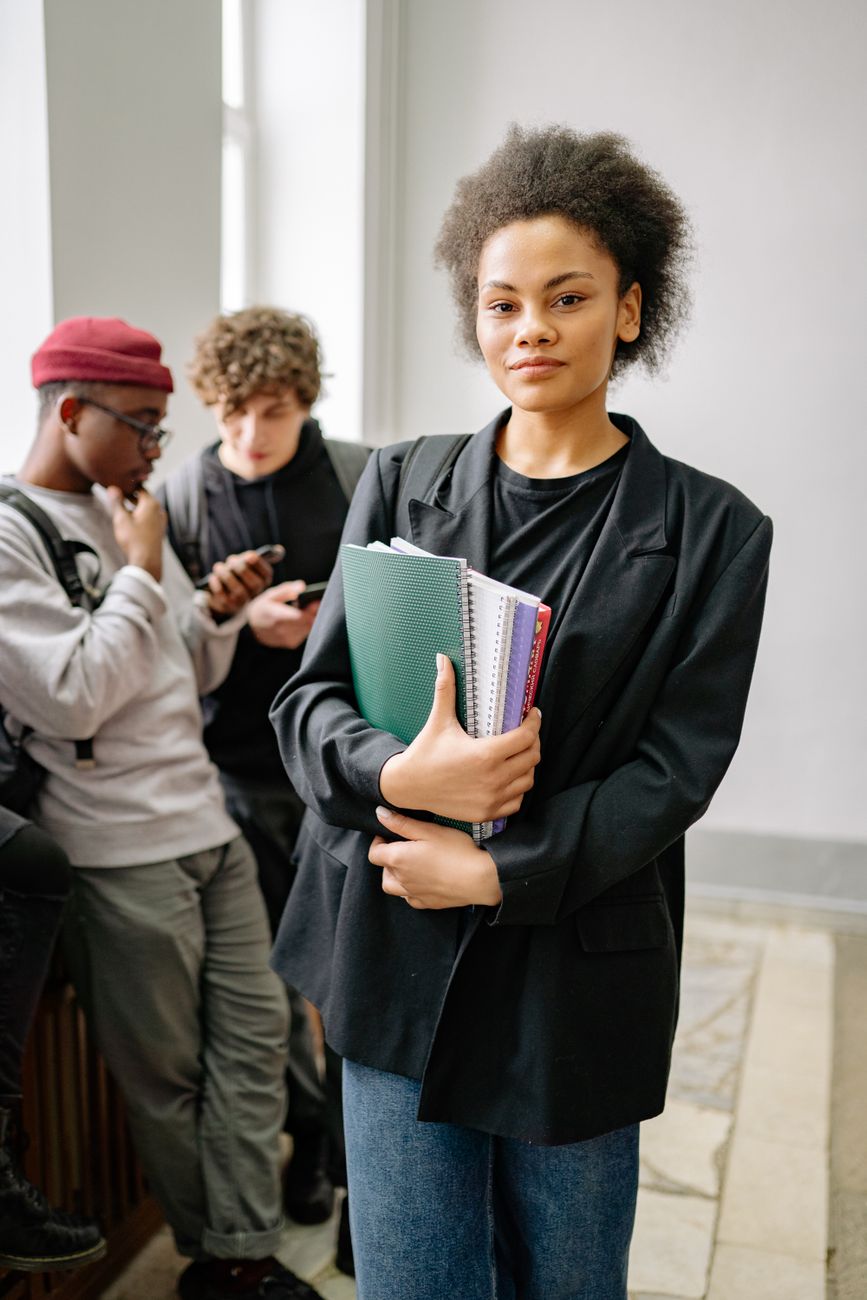
Recently, I’ve had several enquiries from teenagers and students who were actively looking for counselling.
They knew they wanted help. They were able to recognise that something wasn’t quite right and, importantly, they were motivated enough to reach out.
But then came the question:
“How much does it cost?”
And for some, the answer was simply too much.
This has made me think about something we don’t talk about enough: what happens when a young person recognises that they need therapy, but their family cannot afford private counselling?
Because wanting help and being able to access help are two very different things.
Young people are struggling — and the need is growing
The statistics around young people’s mental health are increasingly difficult to ignore.
In October 2026, the Anna Freud Centre published findings from the Growing Up in the 2020s study, which is following nearly 8,000 young people in secondary schools across England.
The first year of findings found that one in four Year 8 students (25%) had a probable mental health condition.
Anna Freud has also highlighted that around one in 12 young people in England currently experience anxiety or depression, while the majority remain untreated.
Mind’s latest research paints a similarly concerning picture. Mind reports that one in five young people have a probable mental health problem, compared with one in nine in 2017.
And the pressure on services is enormous.
At the end of July 2025, there were more than half a million referrals to children and young people’s mental health services where young people were still waiting to start treatment. Mind reports that half of those young people had been waiting for more than a year.
The problem isn’t simply that young people are experiencing more mental-health difficulties.
It’s that the systems designed to support them are struggling to keep up.
The gap between needing help and getting help
The NHS provides free mental-health support for children and young people, including CAMHS, and there are also school and college-based services.
But eligibility, availability and waiting times vary considerably depending on where a young person lives and what support they need.
Mind explains that CAMHS can have long waiting lists, both for an initial appointment and for treatment.
Mind’s Care Before Crisis report found that 41% of young people surveyed identified waiting lists as the biggest obstacle they faced when trying to access mental-health support.
There is also what has been described as a “missing middle” — young people who are struggling significantly but don’t meet the threshold for specialist CAMHS, while still needing more support than self-help or occasional wellbeing advice can provide.
A 2025 briefing from Barnardo’s, the British Association for Counselling and Psychotherapy and Place2Be reported that 28% of CAMHS referrals had been closed without support being offered in the previous 12 months.
That leaves many young people somewhere in between.
Not necessarily in crisis.
But not okay either.
And then there is the cost of private therapy
Private counselling can provide another route to support, particularly for young people who are waiting for NHS services or don’t meet the threshold for specialist provision.
But private therapy comes with a financial cost.
For a family already dealing with rising living costs, school expenses, university costs, transport, food and other pressures, paying £50–£100 for a weekly therapy session simply isn’t realistic for everyone.
And this is where the inequality becomes uncomfortable.
A young person can be emotionally ready for therapy but financially unable to access it.
Mind acknowledges this directly in its guidance for young people. It says private therapy can be expensive, but also notes that “some therapists offer a cheaper ‘concession rate’” for students and people on low incomes.
There are organisations trying to bridge this gap.
For example, some low-cost counselling services offer sessions at substantially reduced rates. Mind in West Essex currently advertises low-cost counselling at £20 for a 50-minute session, delivered by counsellors who are completing their training or are newly qualified, with appropriate supervision and safeguards.
Other services specifically offer student counselling at reduced rates. Examples currently advertised online include student therapy from £25–£35 per session, depending on the provider and practitioner.
These options can make a significant difference.
But availability is limited, and low-cost therapy isn’t consistently available in every area.
What the charities are telling us
The work of organisations such as Anna Freud, Mind, Barnardo’s and Place2Be repeatedly points towards the same conclusion:
Early support matters.
Barnardo’s estimates that around 1 in 6 children have experienced a mental-health problem, and says that increasing demand for specialist support is contributing to long waits and children reaching crisis point.
In another Barnardo’s report, the organisation found that 1.4 million children and young people were estimated to have a mental-health issue potentially requiring assessment and treatment, but less than half — 48% — had received any level of support.
Barnardo’s has also highlighted something that I think is particularly important when we talk about affordability.
In research into the impact of the cost-of-living crisis, one young person said:
“I was thinking of seeing a counsellor, but I don’t want to because of the fear of how much it would cost.”
That sentence says a lot.
The barrier isn’t necessarily a lack of awareness.
It’s not necessarily that the young person doesn’t want help.
Sometimes the barrier is simply money.
We already know that counselling can make a difference
Place2Be’s work in schools provides some useful evidence about the impact of early therapeutic support.
Last year, Place2Be reached more than 340,000 children and young people, with 8,316 pupils receiving one-to-one counselling. Of those receiving individual counselling, 11% were reported to be on a CAMHS waiting list.
Following one-to-one counselling:
- 76% of children with severe difficulties showed an improvement in mental health
- 68% found it easier to have and keep friends
- 64% experienced less impact of their difficulties on learning
Place2Be’s research also demonstrates the importance of intervening earlier rather than waiting until difficulties become severe.
As the organisation puts it:
“We are there for all children but especially those who need us most.”
That principle is important.
Therapy shouldn’t only become accessible once a young person reaches crisis point.
What about university students?
The situation can become particularly complicated when teenagers move into further or higher education.
University students may have access to free counselling through their university, and Student Minds notes that most universities provide some form of free counselling service.
However, university support can be time-limited and may not meet everyone’s needs.
Some students may also be reluctant to use their university’s service because they don’t want their difficulties connected with their educational environment.
For some, private therapy feels more appropriate.
But again, affordability becomes a barrier.
A student who is already managing rent, food, transport, tuition-related costs and the general financial pressures of student life may simply not have another £50–£80 a week available.
And this creates an uncomfortable question:
Should access to good-quality emotional support depend on whether your parents can afford it?
I don’t think it should.
What can we do?
There isn’t one simple solution.
We need properly funded NHS services, accessible school-based support, university counselling, community organisations and charities.
We also need more awareness of low-cost and concessionary counselling.
And, where appropriate, private therapists can play a small part by making some reduced-fee spaces available.
This doesn’t mean that every therapist can offer large numbers of low-cost sessions. Private practitioners have their own professional, financial and practical responsibilities.
But even one affordable therapy place can make a difference to one young person.
There are also organisations such as Anna Freud providing early support through schools and colleges. Their Schools and Colleges Early Support Service offers online support sessions for young people aged 11–25, including self-referral for 16–25-year-olds in participating settings.
And young people should know that private therapy isn’t their only option.
Depending on their age and circumstances, support may be available through:
- their GP
- CAMHS
- their school or college
- university counselling services
- NHS Talking Therapies for eligible older young people
- local charities
- Youth Access services
- school-based Mental Health Support Teams
- low-cost counselling organisations
- therapists offering student or concessionary rates
Young Minds also highlights that local charities and organisations may provide free or low-cost counselling, online support, peer groups, drop-ins and mentoring.
A small change can be better than no support
One of the things that has stayed with me from these recent enquiries is that these young people were asking for help.
They weren’t being forced into therapy.
They weren’t necessarily waiting until somebody else told them they had a problem.
They had reached a point where they were saying:
“I think I need someone to talk to.”
That should be encouraged.
We shouldn’t make young people feel that they need to be in crisis before their difficulties are taken seriously.
We shouldn’t make families choose between essential household expenses and mental-health support.
And we shouldn’t allow cost to become the reason a young person stops asking for help.
There is still a lot of work to do to make therapy genuinely accessible.
But perhaps the conversation needs to move beyond simply asking:
“Is therapy available?”
And start asking:
“Is therapy actually accessible to the young people who need it?”
Because those aren’t the same thing.
If you’re a student looking for support
If private therapy isn’t financially possible, it is still worth asking about student rates, concessionary fees, low-cost counselling and free services in your area.
Your school, college or university may also have support available.
If you’re in England, you can also speak to your GP about your mental health, and depending on your age and circumstances, there may be NHS or community services available to you.
And if you’re a parent whose teenager has asked for therapy, take that request seriously. You don’t necessarily need to have all the answers immediately. The first step can simply be helping them explore what support is available.
Asking for help is a strength — and being unable to afford private therapy should not mean being unable to get help.


Leave a Reply